What students will made/understood by the end of the learning segment:
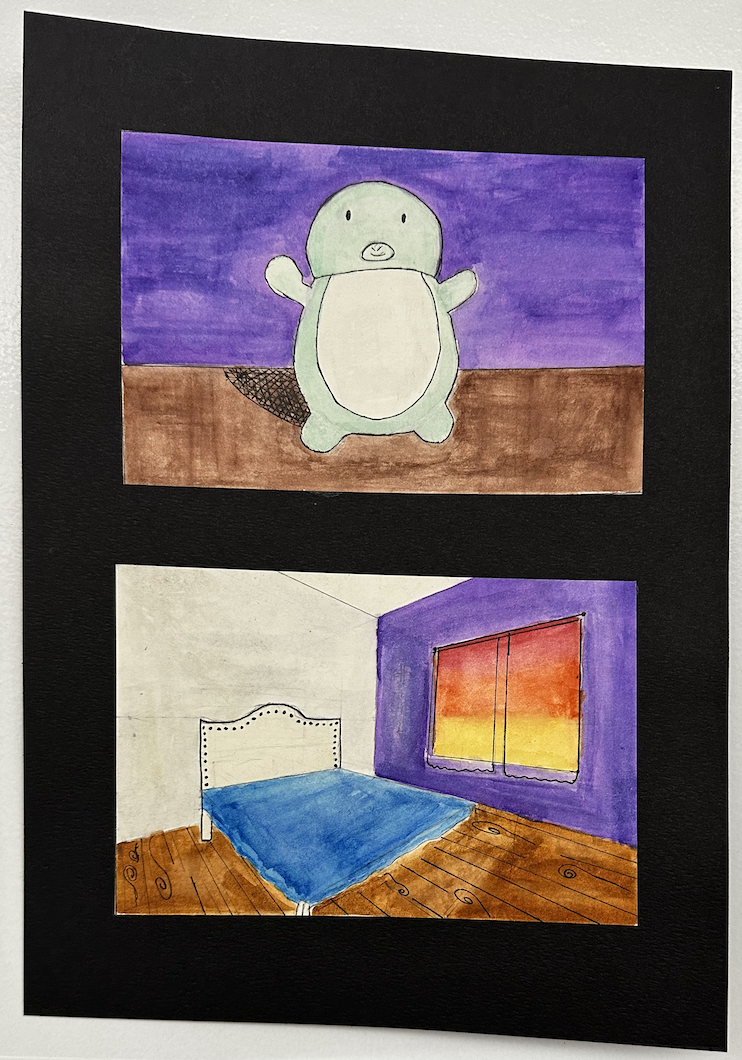
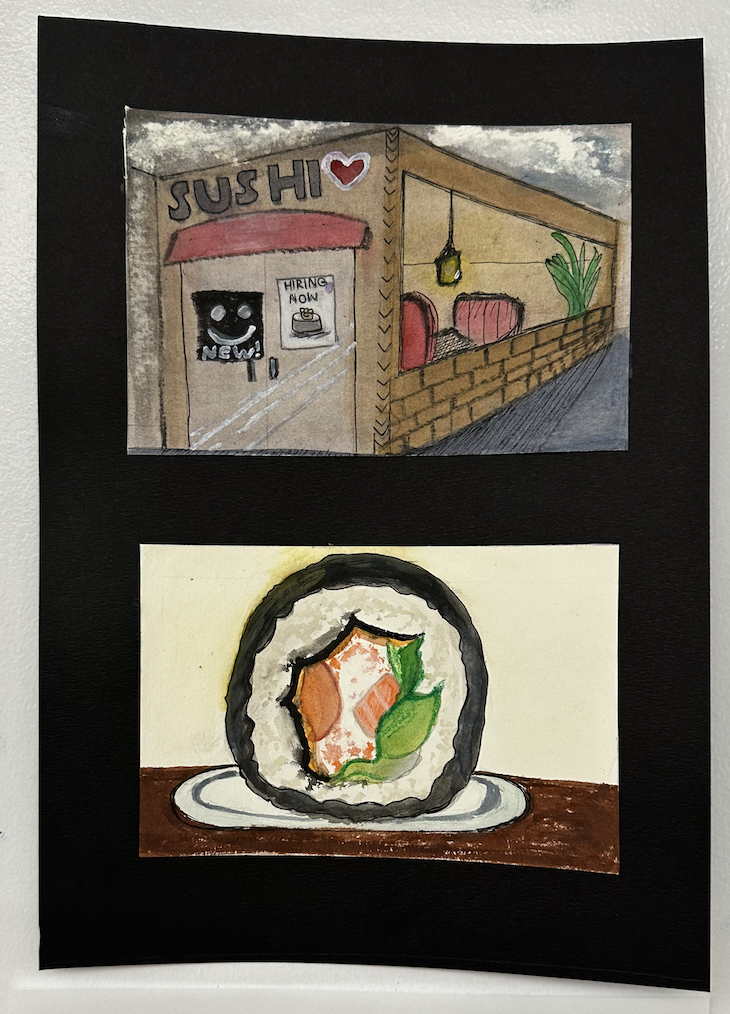
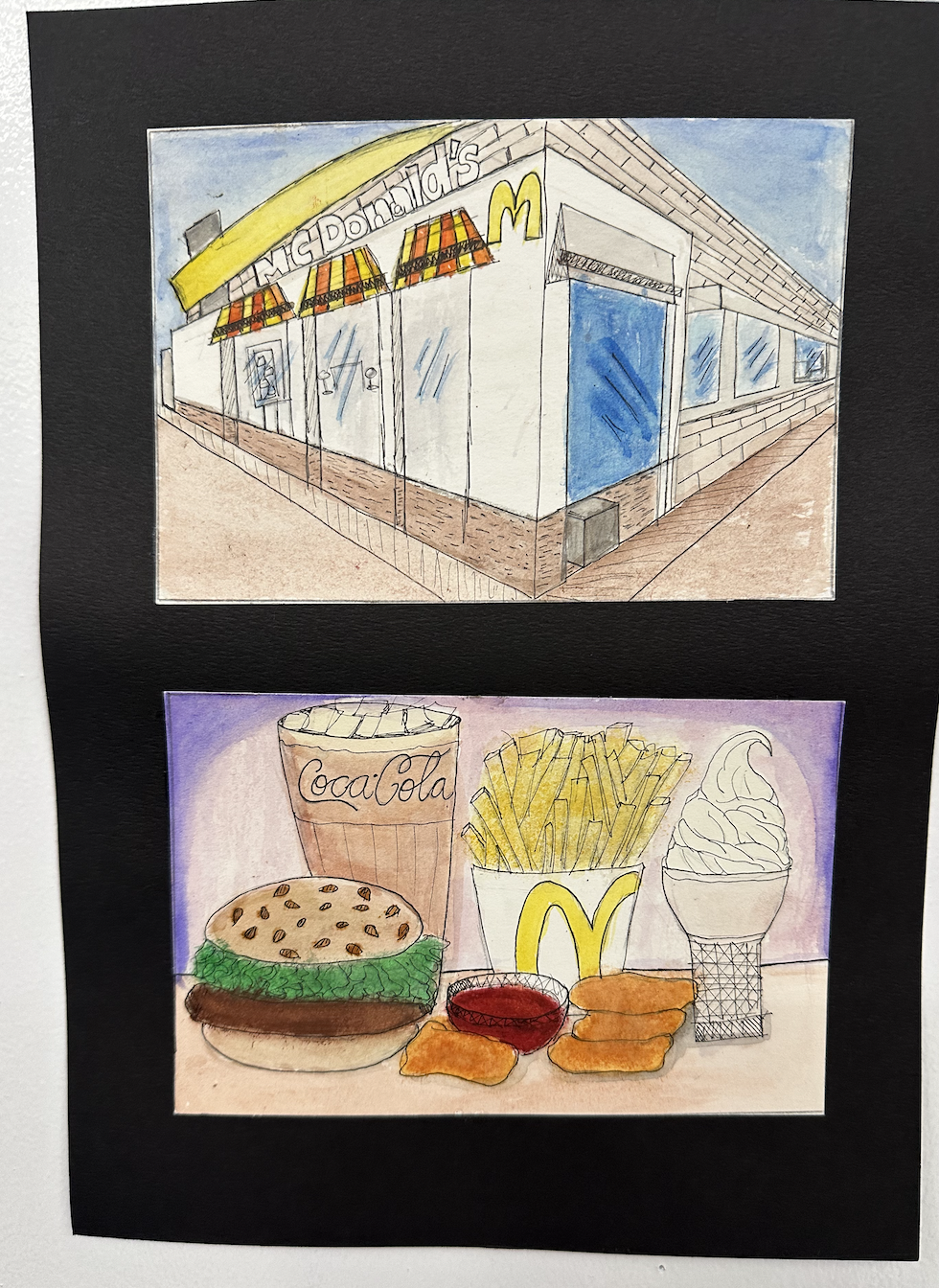
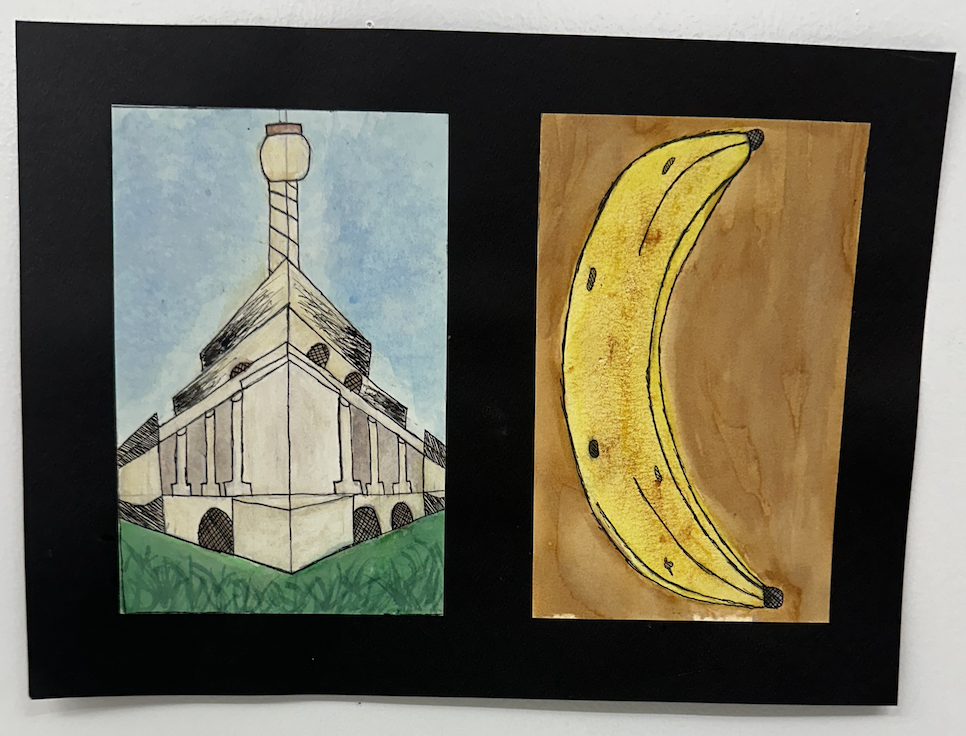
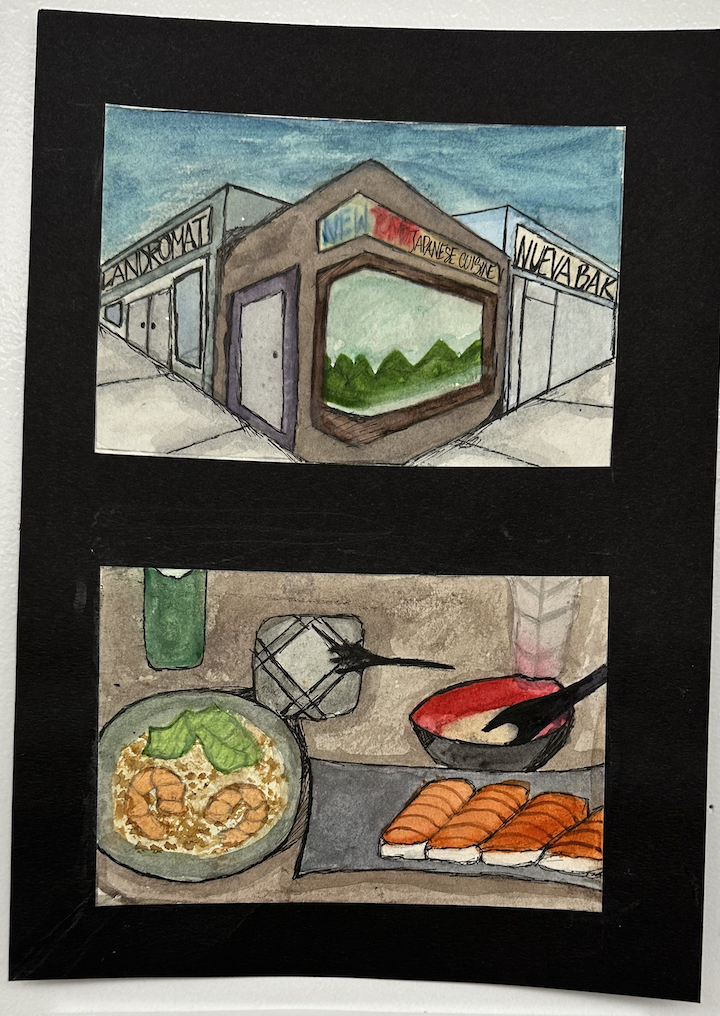
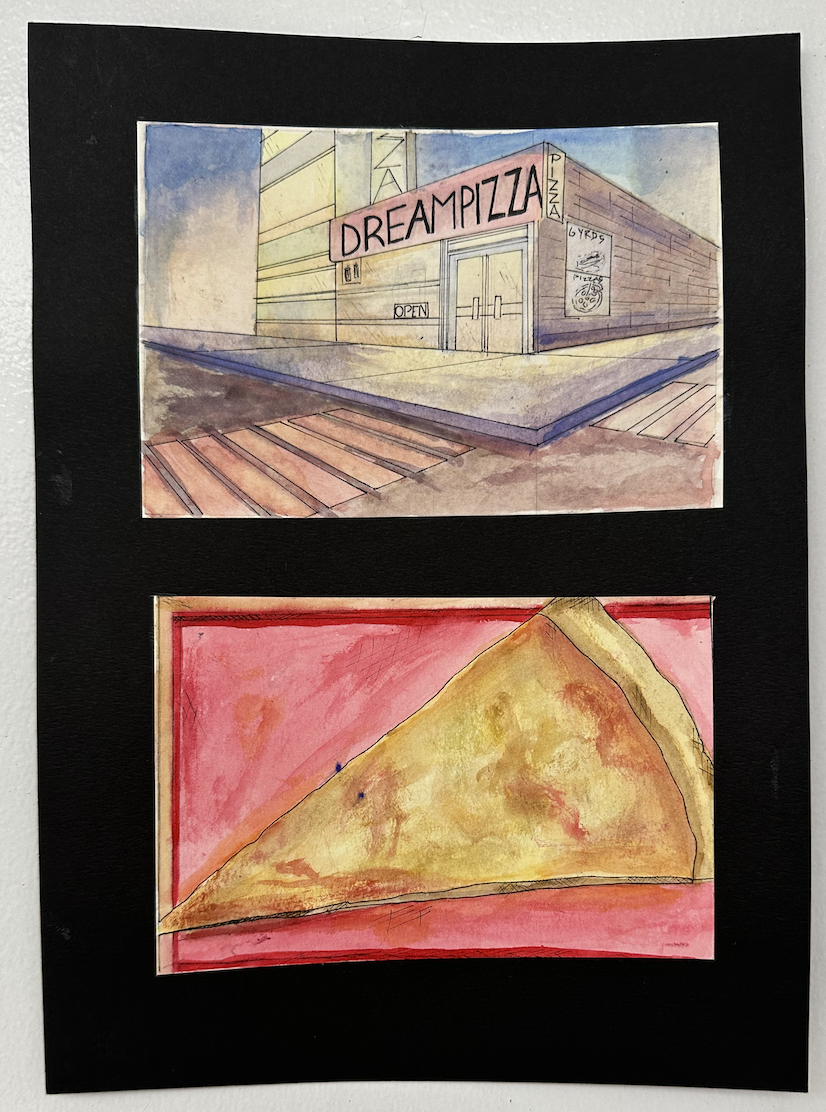
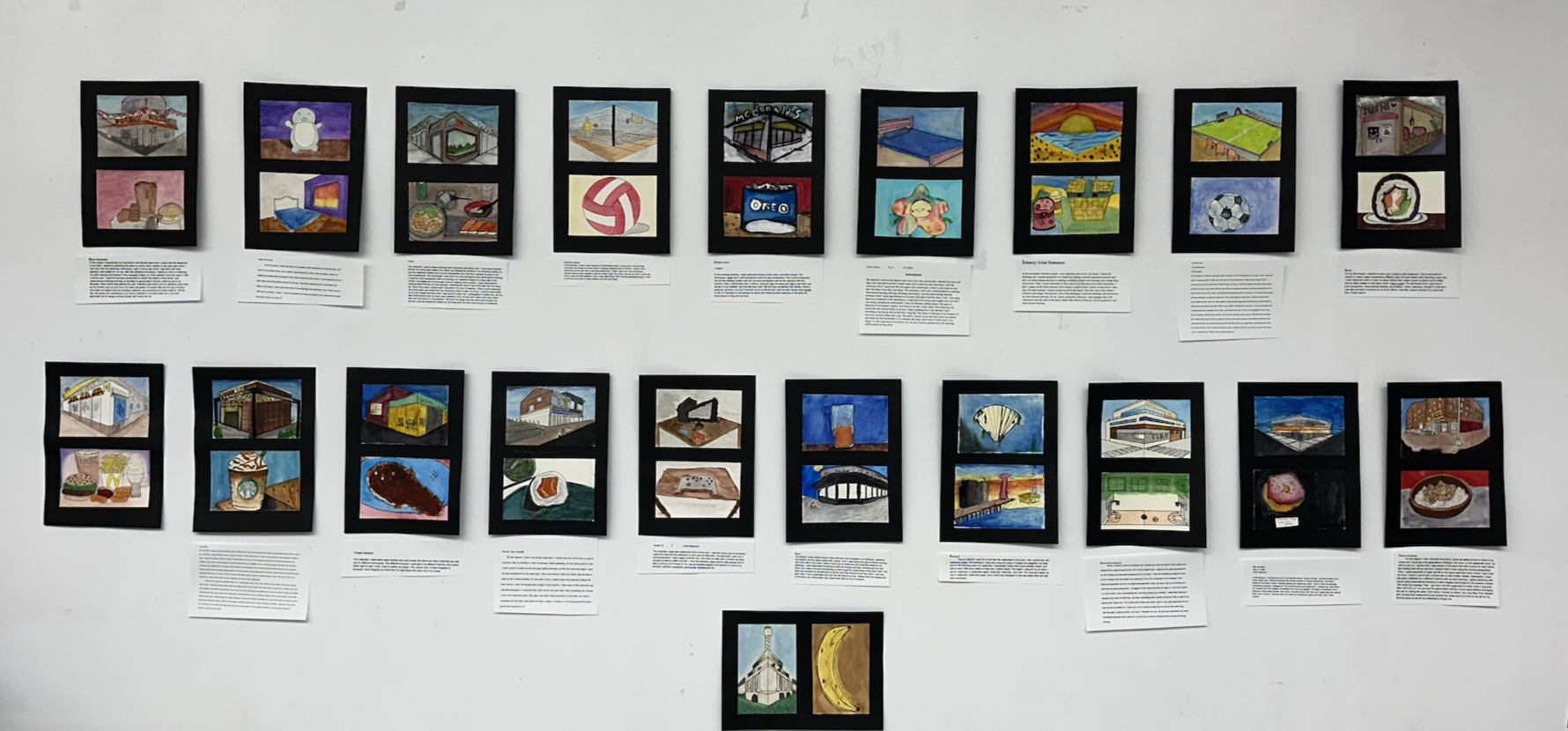
Students created a diptych using watercolor and a micron pen. Students rendered a space
using two-point perspective techniques, choosing a location that is of personal, cultural, or
emotional significance to them. Students drew an object from observation that
connects to the space. These two ink and watercolor pieces will hang side by side and speak to
one another, linking to their lives and experiences.
Learning Objectives within this Learning Segment:
In regard to interpreting art, Lesson 2 will present students with two artists, the Diptych of Jeanne of France by Rogier van der Weyden and Monasita by Ana Mercedes Hoyos. They will observe and analyze these works and learn about and understand the historical context of diptychs and their modern use. They will also develop visual arts vocabulary throughout the slides necessary for the lesson sequence. Lesson 5 will support students in meeting the following 12th-grade benchmarks for Art Making Painting from the NYC Blueprint for Visual Arts, such as referring to artists such as Georgia O’Keeffe and her use of personal style and vision, control of light, value, intensity, and contrast. They will also develop visual arts vocabulary to describe art-making through slides with the necessary vocabulary for the lesson sequence.
In regards to developing works of art/design, students can draw in a 2-point perspective, create vanishing points, and create a technical drawing using a ruler. In lesson two, students will develop works of art following the NYC Visual Arts Blueprint 12th-grade benchmarks for Art Making (Drawing). This includes students drawing from observation using research and reference photos. In Lesson Three, students will draw from observation and research and gather reference photos. In Lesson Four, students will draw from observation and create a contour drawing focusing on simple shapes. In Lesson 5, students will create a series of works that demonstrate the ability to control light, value, intensity, and contrast, the mastery of paint media such as gouache, watercolor, oil, or acrylic, the ability to handle a variety of brushes and a palette knife as a painting tool, and glazing/layering techniques.
In regards to relating art to context, In lesson 2, students will create a collection of drawings that demonstrate a personal style and follow suggested themes and genres, including landscape, cityscape, and everyday life. Students will hone observation skills and develop visual arts vocabulary to describe art, making the tools and techniques used to produce art. They will be invited to explore aspects of their personal or cultural identity through the lens of significant locations. In Lesson 3, students will make connections between their art making and a location that connects to them personally or culturally by depicting this location using a two-point perspective. In lesson 4, students willdepict a connecting object to their location and create an observational drawing, meshing their personal and cultural ties with their art-making practice.